
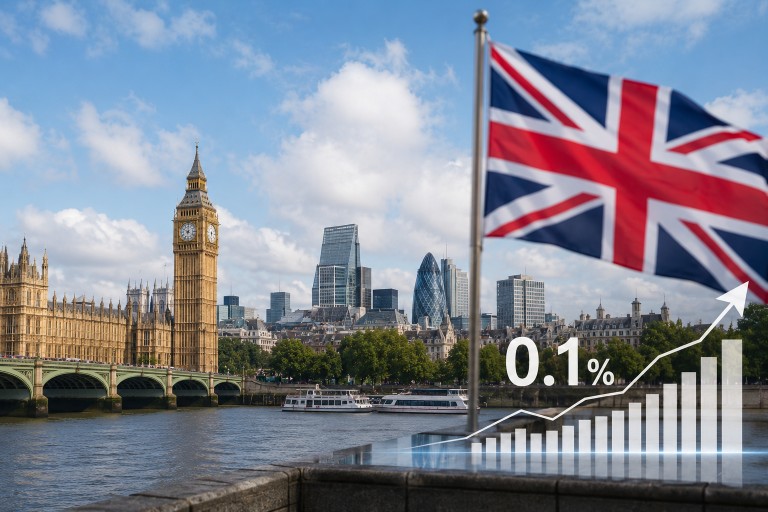
The UK economy showed slight growth in May, expanding by 0.1% following a similar contraction in April. This modest recovery was primarily driven by a 0.3% increase in the services sector. However, the overall economic performance was tempered by a 0.5% decline in production and a 0.8% drop in construction activity. Notably, the scientific research and development sector outperformed others, posting a substantial 5.1% increase over the month.
In the three months leading up to May, the economy grew by 0.7%, marking a slight decrease from the 0.8% growth recorded in the preceding three-month period. Despite these fluctuations, economists highlighted the economy’s resilience in the face of ongoing challenges. Rising energy prices and the uncertain global landscape, particularly due to tensions in the Middle East, have posed significant hurdles to maintaining stable growth.
The International Monetary Fund has taken a more optimistic stance, recently upgrading its forecast for the UK’s economic growth to 1% for the year. Nonetheless, analysts remain cautious, pointing out that the outlook continues to be clouded by geopolitical uncertainties and potential disruptions in supply chains.
Economists warn that while the UK economy has managed to sustain growth, the pressures from increasing energy costs and international instability could still undermine future progress. As the country navigates these challenges, the balance between economic resilience and external risks will be crucial in shaping its economic trajectory in the coming months.