
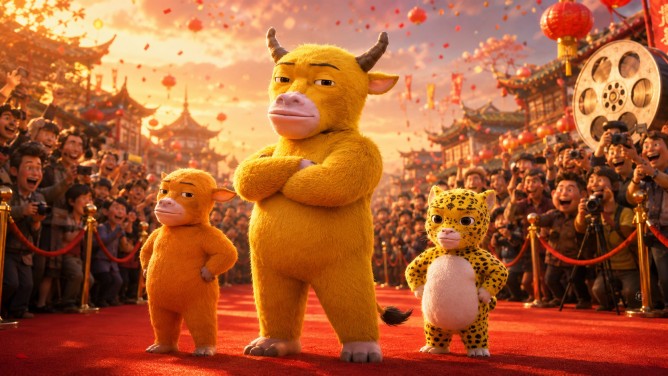
A Chinese animated film titled “Niu Lai,” translating to “The Cow is Coming,” has unexpectedly captured the attention of audiences and turned into a box-office hit. The 86-minute movie, which tells the abstract tale of a newborn calf and a skylark through a dream-like sequence, initially made a modest debut on August 5 with barely any marketing push. In its first 10 days, it brought in around 7,700 yuan, with ticket sales reportedly under 300 across China.
The film’s fortunes took a dramatic turn when social media users began to comment on its peculiar animation and storytelling, labeling it as “so bad it’s good.” This viral chatter piqued public curiosity, driving more people to see the film. As a result, “Niu Lai” has now amassed over 14.9 million yuan, positioning it as one of the year’s surprise successes in Chinese cinema.
Created by just two people, Xin Yumeng and Sun Lifang, who took on the roles of writing, directing, voice acting, and production, the film was completed over five years. Its handmade style contrasts sharply with the sophisticated animation typical of major Chinese productions like “Ne Zha 2,” offering a unique aesthetic that some viewers have appreciated. This comes at a time when the film industry is increasingly leaning on artificial intelligence for production.
Despite its financial success, “Niu Lai” has sparked a debate. While some praise its unconventional charm, others criticize the film’s triumph, arguing that it rewards subpar filmmaking at the expense of more ambitious projects. This division highlights a larger conversation about audience preferences and the impact of social media on the film industry.
Regardless of the mixed reviews, “Niu Lai” exemplifies how a low-profile film with minimal publicity can become a blockbuster through the power of social media and public curiosity. Its journey from obscurity to box-office sensation underscores the unpredictable nature of audience engagement in today’s digital age.