
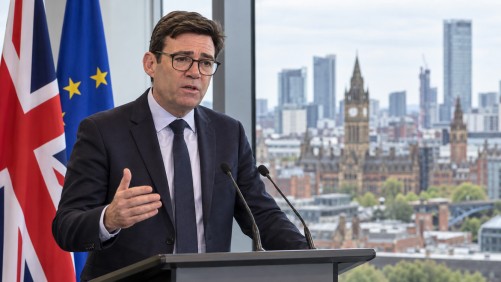
UK Prime Minister Andy Burnham has urged a reassessment of the country’s relationship with the European Union, highlighting the need for a pragmatic approach to future ties. Speaking to Parliament, Burnham emphasized the importance of the upcoming summit in Brussels on November 20 as a chance to enhance cooperation and explore a closer partnership with the EU.
The summit is set to focus on potential agreements in food and drink trade, youth mobility, and emissions trading. The UK government anticipates these arrangements could contribute an economic boost of approximately £10 billion annually. Burnham stressed that while immediate practical agreements are a priority, discussions should also consider the longer-term relationship between the UK and the EU.
Burnham made it clear that the government is not seeking to reverse the Brexit referendum outcome, nor is it aiming to reinstate free movement in current negotiations. However, he emphasized the need for enhanced cooperation on migration and border security. Despite these ambitions, several challenges remain, such as the contentious youth mobility scheme, which would allow young British and EU citizens to live, work, or study in each other’s countries. Discussions continue regarding eligibility, participation limits, and tuition fees.
Another issue is the EU’s proposed “Made in Europe” initiative, which aims to bolster European manufacturing in areas like renewable energy and electric vehicles. British manufacturers express concern that such measures could exclude UK-made components from European supply chains. Burnham acknowledged these risks and advocated for a mutually beneficial arrangement between the UK and EU.
The government also faces scrutiny over alleged Russian interference in the 2016 Brexit referendum. While Burnham acknowledged attempts at interference, he did not provide evidence that these efforts affected the referendum’s outcome. He affirmed the government’s commitment to respecting the result of the vote.
The November summit will serve as a critical test for the UK and EU to rebuild trust and potentially reach agreements on shared economic and political priorities. While there is hope for immediate progress, significant disagreements could hinder efforts to establish a closer long-term partnership.