
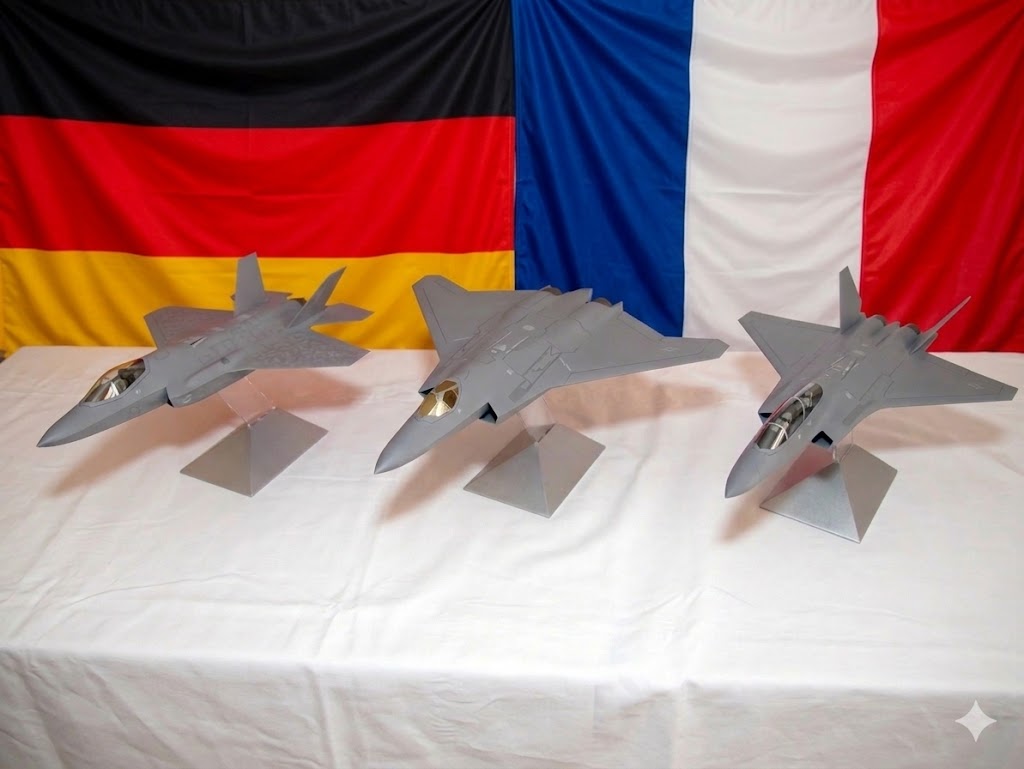
France and Germany have officially ended their collaboration on the Future Combat Air System (FCAS), a joint fighter jet programme that has faced years of stalled progress due to persistent disagreements. This decision marks a considerable setback for European defense integration efforts, highlighting challenges in multinational military projects. Initially launched in 2017 by French President Emmanuel Macron and then-German Chancellor Angela Merkel, the FCAS was intended to develop a next-generation fighter aircraft to replace France’s Rafale jets and the Eurofighter fleets used by Germany and Spain around the year 2040.
The programme’s failure primarily stems from conflicts between the key companies involved: France’s Dassault Aviation and Airbus, which represents both German and Spanish interests. The two sides struggled to reach consensus on critical issues such as leadership roles, intellectual property rights, and the overall management structure of the project. Dassault pushed for a leading role to protect its technological advancements, while Airbus sought a more equitable partnership that would include broader sharing of technology among the countries involved.
Additionally, France and Germany had differing visions for the fighter jet’s operational capabilities. France advocated for a single European aircraft capable of carrying nuclear weapons and operating from aircraft carriers, whereas Germany’s military requirements varied considerably. Despite numerous political attempts to salvage the project, including recent mediation efforts, the involved parties ultimately could not reconcile their differences.
Although the fighter jet component of the FCAS has been scrapped, other elements of the initiative may continue. European officials have suggested that work could proceed independently on supporting technologies such as advanced drones and a secure combat data network, which would be designed to link aircraft and military systems. These projects could be developed as separate entities outside the now-defunct fighter jet programme.
The collapse of this ambitious joint venture underscores the complexities of coordinating large-scale defense initiatives across multiple nations and industries. It raises questions about future endeavors in European defense cooperation and whether similar challenges could hinder other multinational military projects.