
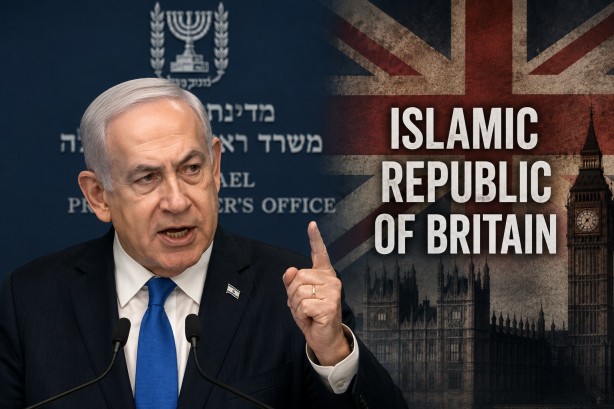
Israeli Prime Minister Benjamin Netanyahu has sparked controversy after labeling the United Kingdom as the “Islamic republic of Britain” and suggesting it could become the “first Islamic republic to get a nuclear weapon.” These statements, made during a podcast interview with Israel’s army radio, have drawn criticism from both British officials and Netanyahu’s political opponents in Israel.
The remarks, which emerged during a discussion about the political landscape in Britain, were made after Netanyahu praised the positive reporting on Israel by Randolph Churchill, the son of former British Prime Minister Winston Churchill. Critics have condemned the comments, arguing they perpetuate Islamophobic stereotypes about Britain’s Muslim community. Notably, it is Pakistan, officially known as the Islamic Republic of Pakistan, that has possessed nuclear weapons since the 1990s.
Relations between the UK and Israel have been increasingly strained, a situation exacerbated by Israeli military actions in Gaza and the UK government’s growing critique of these policies. British Prime Minister Andy Burnham has indicated that the UK might escalate pressure on Israel, potentially through additional sanctions and restrictions on trade involving illegal settlements.
Within Israel, Netanyahu’s statements have also drawn ire, with Israeli opposition politician Avi Dabush criticizing him for risking the country’s relationship with a significant international ally amid Israel’s growing diplomatic isolation. The British Foreign, Commonwealth and Development Office has deemed Netanyahu’s remarks “completely unacceptable” and confirmed that the issue has been communicated to the Israeli government.
The controversy occurs at a time of heightened tension between Israel and several Western nations concerning the conflict in Gaza, alongside intensified debates over Islamophobia and anti-Muslim rhetoric within the UK. These developments underscore the complex dynamics at play in international relations and domestic politics in both countries.