
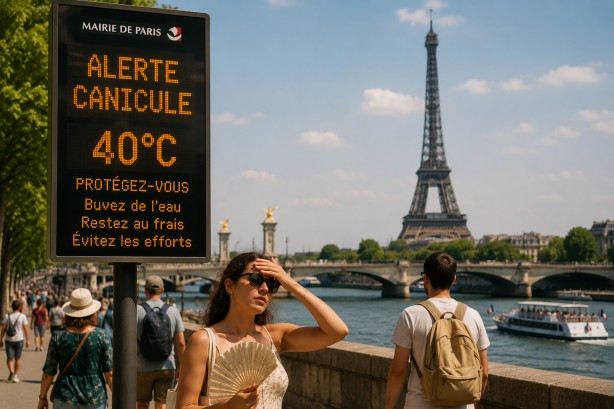
France and Luxembourg are bracing for a fourth intense heatwave this summer, with temperatures predicted to surge dramatically starting July 28 and persist into early August. The sweltering conditions are expected to kick off in southwestern France, gradually extending to encompass much of the nation. Forecasts indicate that some regions might experience scorching highs of 40–41°C, while numerous areas could see temperatures soaring between 35°C and 38°C. Nighttime will offer little respite, as temperatures are anticipated to remain above 20°C in several locations.
In Luxembourg, after a relatively cooler start to the week, a swift rise in temperatures is expected. By Wednesday and Thursday, the mercury is set to climb to between 33–36°C under predominantly clear skies. This sudden increase will mark a significant shift from earlier in the week, as the region prepares for the heatwave.
Weather specialists are cautioning that this prolonged heatwave may stretch into the early days of August. This extended period of high temperatures is raising alarms about ongoing drought conditions, as well as an increased risk of wildfires across these regions. The combination of extreme heat and dry weather presents a significant challenge, as communities brace for potential impacts on both the environment and public health.
The persistent heat is particularly concerning given the already heightened drought conditions affecting parts of France and Luxembourg. The lack of relief during nighttime hours is likely to exacerbate the situation, making it difficult for residents to find respite from the oppressive heat. With temperatures remaining above 20°C at night in many areas, the continuous high temperatures pose a risk to vulnerable populations, including the elderly and those with pre-existing health conditions.
As the heatwave approaches, authorities in both France and Luxembourg are expected to issue advisories and urge citizens to take precautions to protect themselves from the extreme weather. This includes staying hydrated, avoiding outdoor activities during peak heat hours, and checking on neighbors who may be at risk. The looming threat of wildfires also means that local firefighting resources are on high alert, prepared to respond to any emergencies that may arise from the soaring temperatures.